Category Archives: Groups/Events

Acknowledging Trade Offs when it Comes to Saving Water

Oil and Gas versus Water

The greater the distance your food travels to get to your table, the more oil-dependent your lifestyle. Saving energy is one reason why we’ve expanded our fruit and vegetable production. Freshness and knowing that it was safely grown are other reasons. But gardens themselves take resources, particularly water.

Although we’ve had somewhat decent rainfall this year in Minnesota, fresh water is a valuable resource that really needs to be conserved. We have only one rain barrel and we haven’t always used it well. We want a multi-barrel system with a pump but we’re not there yet. Even the multi-headed sprinkler system I set up hasn’t been working properly. Next year I’m going try the newest low-tech watering trick every garden website is showing – plastic pop bottles planted upside down near voracious plants like tomatoes.

We eat something from the garden almost every day, but I’m also learning to process vegetables for winter. I’m most familiar with water-bath canning. I can tomatoes, sauce and pickles – things with high amounts of acid. It takes quite a lot of water to wash the vegetables and to fill the canning pot. And it takes a fair amount of natural gas to heat all that water. If I’m going to be canning two days in a row, I save the water in the canning pot, but I have a very small and inefficient kitchen. I can’t keep a huge pot of water sitting around. If it’s not going to be used soon, we “water” the compost bin (compost breaks down faster when it’s got the right amount of moisture) or the veggies with it.
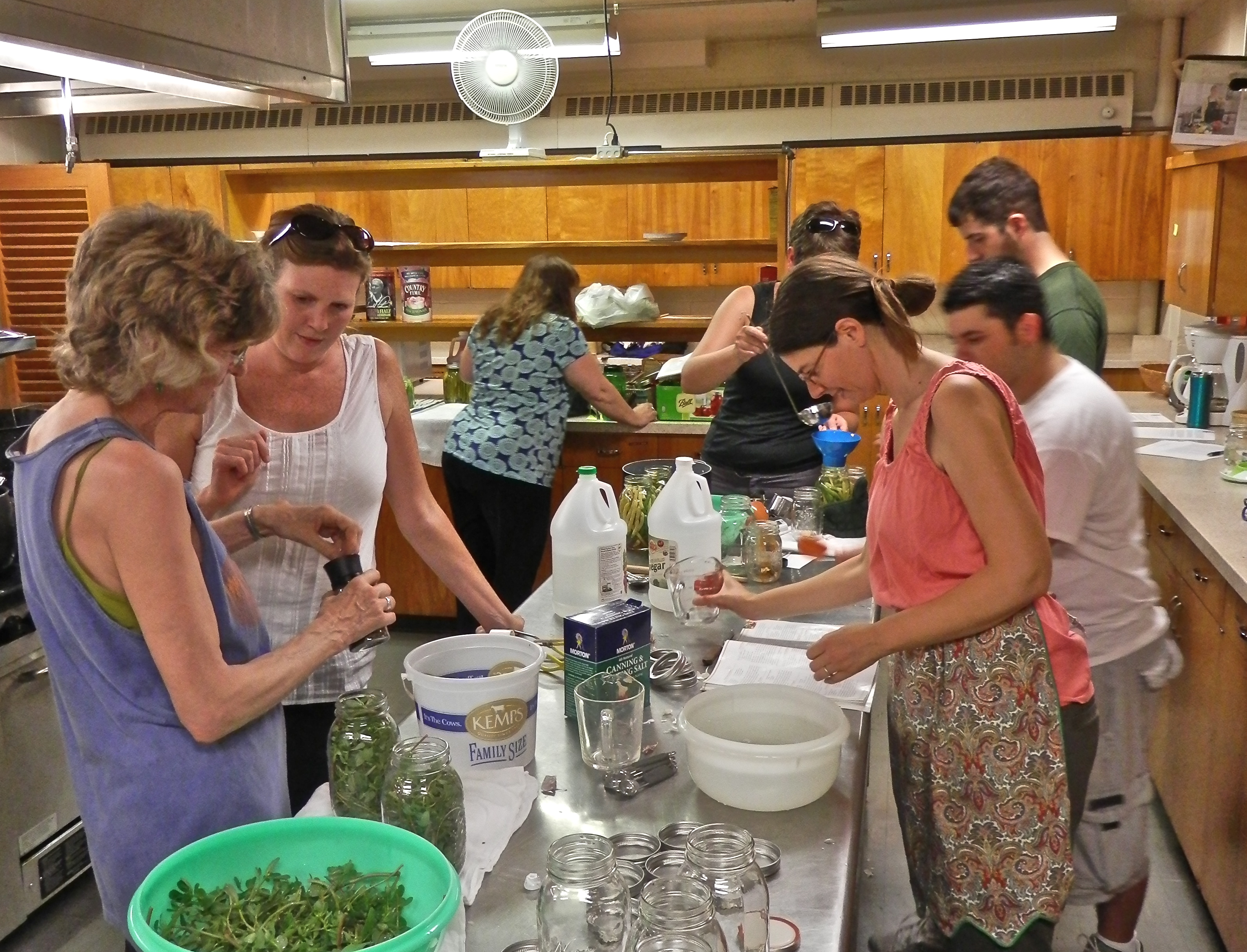
Canning together saves resources and is a lot more fun.

In the past month, I’ve been canning with my neighborhood Transition group (Transition Longfellow). As part of our reskilling efforts, we’ve been teaching folks how to pickle veggies and can tomatoes. By doing these projects together in small groups — many people using the same water bath — we save water and natural gas.

I recently bought a pressure canner so I can process low-acid foods like beets and green beans and meat. At first I couldn’t understand why people said it was more efficient because a pressure canner takes far more time to process foods. Now that I’ve done my first batches of soup and broth, I understand. The pressure canner uses only a couple of quarts of water – as opposed to many gallons used in the water canner – and once it reaches boiling, I can turn the gas to the very lowest setting. Pressure keeps the heat high.

I’ve got two more food preservation methods to learn: dehydrating and fermenting. I’ve just bought a pickling jar to ferment cucumber pickles and a glazed crock to ferment cabbage for sauerkraut, both from EggPlant Urban Farm Supply. They also have a glazed water-seal pot for pickling, which is locally made. I’m in love with it but it’s too expensive for me.

Ultimately, I need to learn more about methods of food preservation that use fewer, or more easily available resources. I’ve ordered two books on this:

The Building Blocks of a Better Life

Learning how to pickle cucumbers and green beans

Our local sustainability group — Transition Longfellow — has been helping people preserve their garden produce with group cucumber and bean pickling and group tomato canning workshops. This summer we’ve also built solar cookers and Little Free Libraries. Some members have gone berry picking together, toured each others’ gardens, and made jam, jellies and soups together. These are teaching and learning moments, but they are also friend-making and community building moments.

Transition Longfellow First Saturday Discussion Group

How often do you hear people complain that as they get older, it’s harder to make friends. It doesn’t have to be that way. Since becoming involved with the Transition movement, I have not only learned new skills, I’ve met literally hundreds of people with whom I have important things in common. I have made many new – and I hope lasting – friendships. It has enriched my life (and my pantry) immensely.

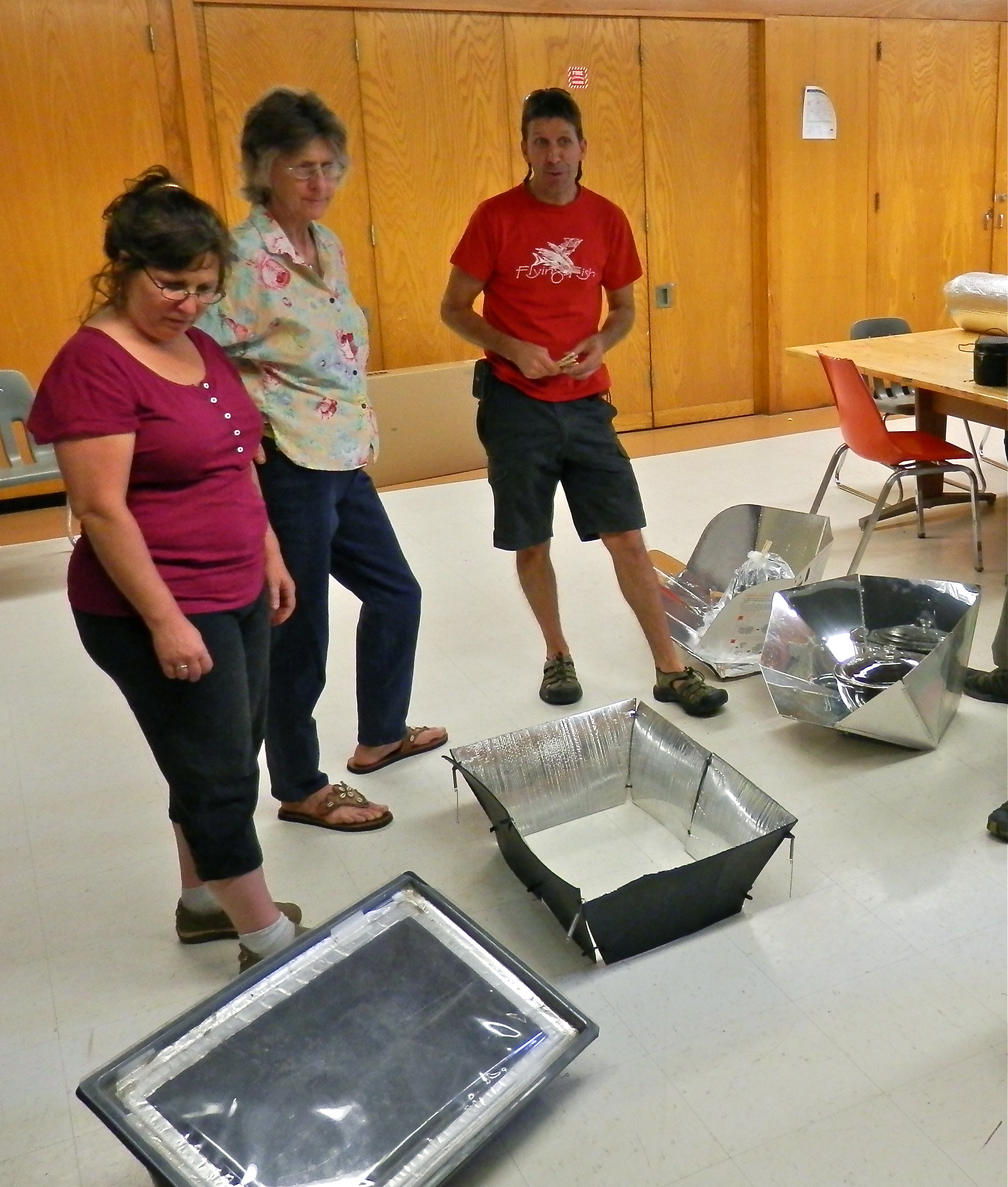
Learning about – and making – a solar cooker with friends from Transition Longfellow.

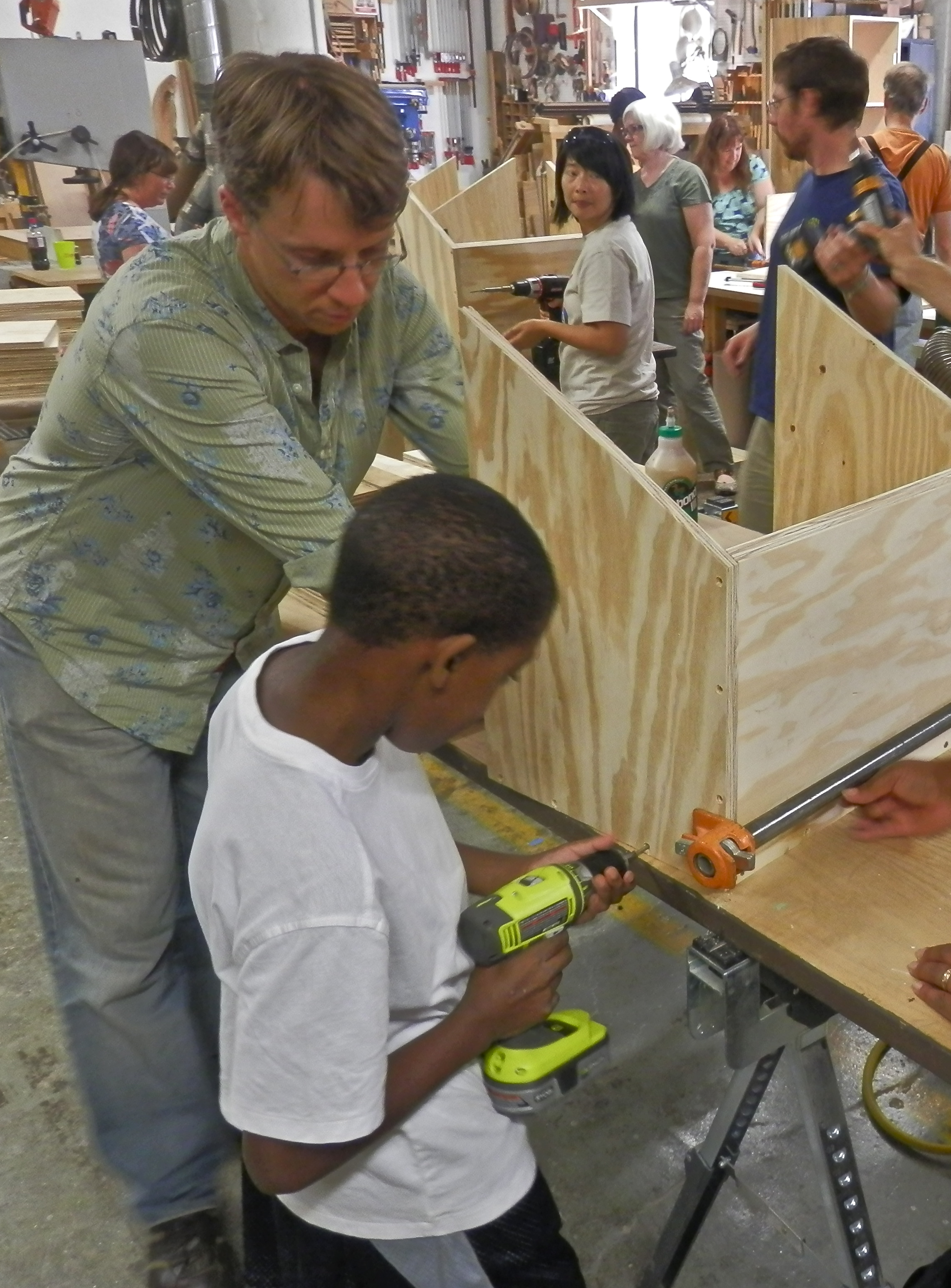
While it may be challenging to make significant lifestyle changes to reduce your carbon footprint, to reduce waste, or to grow your own food, building a network of supportive friends who are walking the same path makes this effort much more joyful and rewarding. We are amazed at not only the talent of people in our community, but also their willingness to share and teach. Last weekend, a very skilled carpenter helped a dozen people build Little Free Libraries together, making his studio available for us to use. Just yesterday, a new friend spent most of the day with me teaching me how to use a pressure canner to can soup.

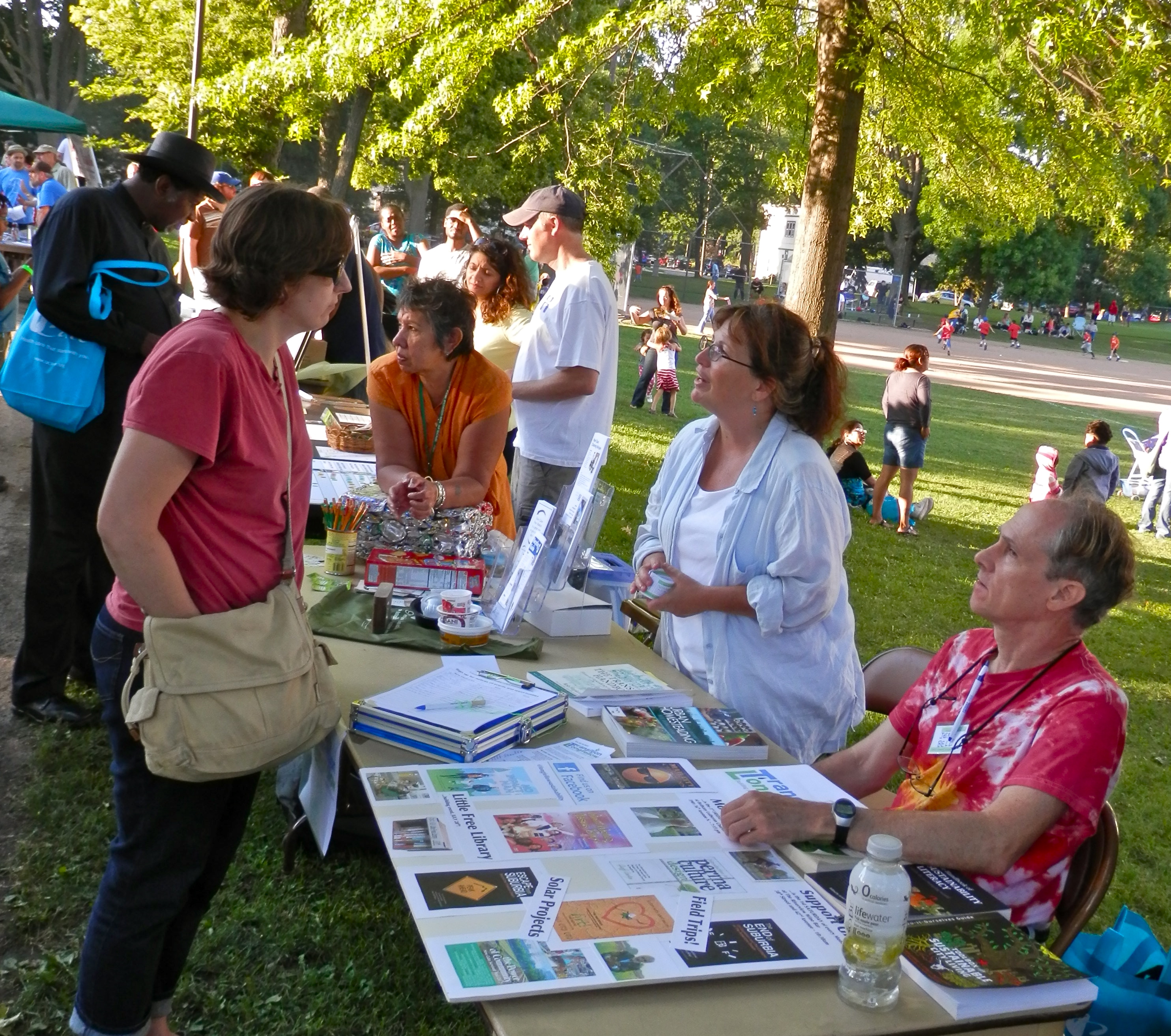
Spreading the word that Longfellow has a neighborhood sustainability group and everyone is invited!

If you are in the Longfellow neighborhood, we hope you will join us. I think you’ll find many opportunities to participate and to build new friendships. We host a 1st Saturday discussion group at the Riverview Wine Bar from 10:30 to noon. We also host a potluck/movie night on the 3rd Friday of each month (starting again in Sept), at Bethany Lutheran Church on 36th Avenue and 39th St. Other events are offered occasionally throughout the year. Of course, if you’d like to lead an event or offer a training, please let us know. We’ll advertise it to our list.

Neighbors get to know one another while building “Little Free Libraries” together

If you live elsewhere, don’t wait for someone else to make things happen. YOU can make things happen. YOU can create a flyer and post it at as local coffee shop to create a sustainability group. YOU can host a reading group at your local library or church. If you are in the Twin Cities, contact the Alliance for Sustainability to see if they know others in your area who are interested in these types of activities or if there is already a group in your community.

The Three Actions Project Begins

In an effort to jump-start our 2012 challenge goal of becoming a zero-waste household, we’ve become part of the Three Actions project. The three ACTIONS Project is a community-action program designed to “support individuals in developing sustainable lifestyle habits and to capture individual experiences to inform greater change in community services, design, and public policy.”

We heard about the program through the Alliance for Sustainability. We checked out the website, and especially the menu of actions, and we liked the structured approach. If you click on each action, it provides information and a series of worksheets to help you develop a baseline and track your progress.

Together we’ve chosen to:

  • Eliminate all waste (our original goal for 2012)
  • Reduce our plug usage by 33%

Leslie has also chosen to eliminate food spoilage and waste (think garden produce) and Peter has chosen to live within his water budget.

We haven’t finished week 1 (baseline measurements) but so far we’re having a bit of trouble getting our heads around measuring. Waste and food waste haven’t been hard, but understanding how much rainwater falls on our house (natural water budget) was difficult. And we haven’t finished filling out the forms to understand electrical usage for each appliance. But we’re plugging away.

Let’s see what we can do in the next 60 days.

Transition Speaker Brian Kaller Coming to Twin Cities in July

In 2010, my husband and I changed our lives because we heard Richard Heinberg speak about the Transition movement. This may be your chance to have a life-changing encounter with the message of the Transition movement.

Brian Kaller, a former Twin Citian now living and working in Ireland, will be speaking at Macalester College in a FREE talk entitled, “O’Sterity: How the Irish Thrived in Desperate Times.”

In the coming decades, we will all face the inter-related challenges of peak oil, climate change and economic instability (what the Transition movement calls “the Long Emergency.”) Among the tools we have for meeting these challenges are the skills and knowledge gathered by traditional cultures over the centuries — skills and knowledge that allowed humankind to thrive. Ireland in the 1970s, when his wife was growing up, was a country “poorer than many Third-World countries, and not everyone had electricity or indoor plumbing.” Despite hardships, statistics show that people at that time were better-educated and healthier. And in surveys, the Irish reported being happier at that time than Americans report being today. Brian will talk about ways people can thrive during chaotic times, giving examples from Ireland.

You can learn more about Brian Kaller by visiting his blog, “Restoring Mayberry.”

WHEN (note, this is the same presentation, given on two different days):
Friday, July 13: 6:00 – 6:30 pm reception; 6:30 program
Saturday, July 14: 7:00 pm program

WHERE: Weyerhaeuser Hall, Macalester College, on the corner of Macalester Street and Grand Avenue, St. Paul, Minnesota.

Irrigation-Free Landscaping Workshop

Some of the effects of global climate instability are increasingly violent storm activity as well as high temps and droughts. Many north Longfellow homes are already challenged by occasional basement flooding during heavy storms and it’s not uncommon for water to collect in the street when the sewer system becomes overburdened from heavy rains. Landscaping can help both of these problems – providing a way for rainwater to stay on the homeowners property and out of the sewer, and minimizing the impact of drought and water needed to maintain plants in the yard.

On Saturday, July 28th, from 11:00 am to noon, the landscape design firm PRAIRIEFORM will lead a workshop on irrigation-free landscaping for residents of the Longfellow neighborhood. Irrigation-free landscaping combines drought-tolerant planting techniques and “drought training” for plants. It creates a landscape that does not require supplemental watering and that minimize rainwater runoff from a property while still providing an animal- and people-friendly yard. The irrigation-free landscape is formal enough to fit in a front-yard setting.

The workshop will be held in a yard on the northeast corner of 28th Street & 42nd Avenue. This is the location of the irrigation-free landscaping pilot project the neighborhood undertook last year, with funding from the homeowner, the Mississippi Watershed Management Organization and LCC’s Environment & Transportation Committee.

If you’d like to attend, please RSVP (appreciated but not required) to Spencer: spencer@longfellow.org or call 612-722-4529 ext. 5.

We’re on the Mpls/St Paul Home Tour

Oops! I should have posted this on Friday but it’s not too late. Our house is on the Minneapolis/St. Paul Home Tour. The Tour continues on Sunday, April 289 from noon to 5 pm. A representative from Innovative Power Systems, our solar installer, will be on hand from approximately noon to 2 pm. The builder who did our second floor addition will also be here for part of the day.

We are house #31. Stop in and see our solar PV and heat systems. I’ll be happy to answer any questions. And my husband is stationed in the basement by the worm bin where he can talk about vermiculture, composting and home brewing. Our greeter, Annette, is knowledgeable about recycling and waste management so feel free to talk to her about where the City of Minneapolis is going with its new recycling programs.

Hope to see you on Sunday!

Intro to Solar Cookers

Every year my husband’s family took a trip to Arizona to visit his grandmother. He has vivid memories of eating hot grapefruit and soggy crackers that were left in the back window. Despite those unappetizing memories, he’s willing to give intentional solar cooking a try, starting with a workshop on Monday, April 23rd, 7 – 9 pm, at Brackett Park.

Transition Longfellow is sponsoring the presentation by Bruce Stahlberg of Affordable Energy Solutions, located right in the ‘hood, at 3535 East Lake Street. Bruce will bring several types of solar cookers with him for you to view. He’ll be talking about how solar cookers work, what kind of cooking you can do in them, what cooker works best for what type of application, and some tips on solar cooking.

A second session will be held in May, at which time attendees can build their own solar cooker. Bruce will tell you what materials you will need to bring with you to build your cooker.

This event is FREE, thanks to Bruce’s generous donation of his time.

April Movies, Discussions and More

Mad City Chickens
April 20, 6:30 potluck; 7:15 movie; 8:30 discussion

The Longfellow Transition group will be showing Mad City Chickens at our monthly potluck. The movie is about keeping chickens in your city yard. Some of our regular movie-night attenders are chicken-keepers so if you come for the potluck, you may be getting the inside dish on chickens and roosters at your table.

Our guest speaker this month will be one or both of the owners of Egg|Plant Urban Farm Supply, located at 1771 Selby Ave in St. Paul. Egg|Plant sells chicks and chicken supplies and offers classes on raising chickens. (We stopped in the shop last week and it was delightful. They also sell gardening supplies, canning-dehydrating-fermentation supplies, and cheese-making supplies.)

Hennepin County Library “Club Book” Author Event
Sunday, April 22, 2 PM
Ridgedale Library, Minnetonka
Richard Louv is a journalist and author of eight books about the connections between family, nature and community. Louv’s first book, “Last Child in the Woods: Saving Our Children From Nature-Deficit Disorder,” was translated into 10 languages and published in 15 countries. His newest book, “The Nature Principle: Human Restoration and the End of Nature-Deficit Disorder,” offers a vision of the future. Book sale and signing follow presentation. FREE

First Unitarian Wins Energy Competition, Tour the Building and Learn How

In 2011, the First Unitarian Society of Minneapolis won an EPA Energy Star national building competition, “Battle of the Buildings,” in the House of Worship category for their efforts to save energy and reduce greenhouse gas emissions.

By taking advantage of low-cost and no-cost energy-saving opportunities, the congregation saved more than $16,000 in the first year. See how they did it — and how your church can do it, too. The Metro Clean Energy Resource Team (CERT) and Minnesota Interfaith Power & Light are hosting a tour of the First Unitarian building at 900 Mount Curve Avenue, Minneapolis, on Sunday, March 18, from 1:00 to 3:00 pm. This event is free and open to the public.

Read more about what the church did to achieve such excellent results.