
Author Archives: thinkofitasanadventure

Unknown's avatar

About thinkofitasanadventure

My husband Peter and I attended a sustainability conference with Richard Heinberg of the Post Carbon Institute in 2010. We learned some hard truths about climate change that shook us to our core. We knew we needed to transition away from fossil fuels as soon as possible, for the sake of our children. We initiated a neighborhood Transition group (Transition Longfellow). It became the center of our lives. In 2019, we downsized and moved to a tiny rural village. It's a whole new way of life and we've got a lot more learning to do. We're choosing to continue to "think of it as an adventure."

Longfellow Sustainability Group – I’m Loving the Support

The Longfellow Sustainability Group meets on the first Saturday of every month at 10:30 am at Peace Coffee on Minnehaha and 33rd. We get to meet new neighbors almost every month. We discuss our experience with the prior month’s mini challenge, share tips and  resources, and have a great conversation.

Next group meeting is July 2. We’ll be reporting in on our local food efforts.

The group has been a wonderful addition to our family’s greening lifestyle. We really enjoy hearing what other people have done. We learn a lot and every single time we come away with new ideas. I’m really grateful for the people who have come, whether once or several times. Because of you, we’ve:

  • Signed up for the Shop the Coop class (and the home pickling class while I was at it)
  • Gotten involved in the Southside Food Hub
  • Met the wonderful owner of Gandhi Mahal restaurant
  • Fearlessly moved forward in a lifestyle with less toilet paper (Who knew that this was such a hot topic! But I guess we’re a pretty cosmopolitan bunch here in Longfellow and once you’ve traveled the world a bit, you have a better understanding of what is and is not a necessity.)
  • Begun worm composting
  • Diligently kept moving forward on reducing our energy use because we want to report back that we’ve made progress

Thanks, everyone, for making this community a better place to be.
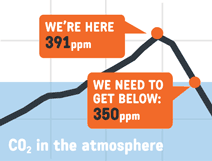
Highest CO2 Emissions in History Sets the Stage for More Biking

The transportation mini-challenge doesn’t start until August, but when I saw that CLIF BAR had created a nifty biking challenge, I thought this was as good a time as any to commit to more biking for both the health benefits and CO2 reduction.

I have to admit, I was spurred to action when I saw the International Energy Agency  report that 2010 had the highest CO2 emissions in history. “At current rates, the 2° temperature increase that most experts consider the threshold of unmanageable climate change, will be considered a floor for potential future temperatures, rather than the ceiling.” That’s grim news from Greenbiz.

So what’s the challenge? To use your bike for any trip you take within a 2 mile radius of  your home.

Why 2 miles?

Forty percent of all urban travel is within 2 miles of home and yet 90% of the time people get in a car to make that trip! That puts tons of carbon into the atmosphere, exacerbating the problem of climate change. CLIF BAR hopes their challenge will inspire people to avoid 100,000 car trips.

Sign up to take the 2 Mile Challenge!

Last weekend I biked to book group, biked to an exercise class in Highland Park (almost but didn’t quite make it up the hill), and biked to the coop where I signed up for the ZAP program. (The ZAP program offers an incentive for members to visit the co-op on bicycle.)

That’s a great start for me. I’m looking forward to racking up more points for Team 350 this weekend. Maybe a bike ride to PRIDE.

Experiments in Square-Foot Gardening

This month the mini-challenge is localizing our food.We’re paying attention to where our food comes from at the coop, choosing Minnesota or Wisconsin-grown, rather than California or Mexico. At our last trip, 24% of our purchase was local.

raised bed garden box

One of our square foot garden boxes

The other big effort – especially this time of year – is in the garden.

Last year we worked with the Permaculture Institute for Cold Climates and had an urban farmer create and work our veggie garden. This year we’re back to doing it ourselves, but with a twist. We’ve planted several square foot gardens in addition to a more traditional vegetable plantings directly in the dirt (the circular bed). The square foot layout is intended to maximize yield while minimizing space, to virtually eliminate weeding, and to generally simplify gardening.

Continue reading

Home Funerals and Green Burials

Last week we attended a seminar organized by the Minnesota Threshold Network. I’ve  been interested in green burial ever since I heard about it from a funeral director when I volunteered at hospice. The trouble is, it has been illegal in Minnesota — until now.

Thanks to the work of State Rep. Carolyn Laine, Minnesota families now have choices about how to conduct funerals and burials. (But we may not have these options for very long. HF1744 has been introduced in the state legislature and it evidently would repeal some or all of the rights only recently gained. As I understand it, the president of the funeral director’s assn is a constituent of the bill’s sponsor.)

Read more

Continue reading

What’s Up This Week

Community Warming at Glaciers

June 8th , 6-8pm, with LOLA artists, music and food. Celebrate the summer with LCC with a lovely night on the patio in front of the beautiful mosaic.

The North Coast Nosh

June 10, 6:30–9:00 p.m, Peace Coffee Shop: Join The Heavy Table and Peace Coffee for a night of sipping and sampling the wares of local brewers, bakers, cheesemakers, honey producers and more. Attendees must be 21 or over. Proceeds from the evening will be split between The Heavy Table and the Institute for Agriculture and Trade Policy, earmarked for work on food justice.

June Mini-Challenge: Eat Local

June in Minnesota means gardening!

Our mini-challenge this month is to take steps to make our food choices more local.

Gardening: If you’ve got a yard, you can start a garden. At our house, we are trying out square foot gardening. We’ve planted some plants in the traditional manner. We’ve got some in boxes with our own soil, and we’ve got 3 boxes planted with the special Mel’s mix. We’ll see how they do.

Don’t have space for a garden? Try a container garden on a patio or deck. One group member who had no sun in her yard walked over to a neighbor and asked if she could garden in her spare lot. The neighbor said yes.

Shop local: Maybe you don’t have time to garden. You can still shop more locally by buying at the Midtown Farmer’s market or the coop. Or visit your favorite restaurant and see if they source their foods locally. Consider signing on to the Eat Local challenge.

A group member reported that if you shop the Seward Coop, your receipt will show you what percentage of your purchase was locally grown. She recently took a class on shopping the coop on a budget and reported that it was very informative and inspirational. She realized she could save a lot more money. There is another class coming up on July 16.

Understand Food Issues: Maybe you’d like to get a better understanding of the issues. Consider joining a book group at the Institute for Agriculture and Trade Policy. The next book the group is reading is Slow Death by Rubber Duck, by Rick Smith and Bruce Lourie, July 19, 6:30–8:00 p.m. at Peace Coffee Shop. “How a dare between two friends became a revealing lesson about how toxins in everyday products affect us all.”

Whatever you do, happy eating!

Continue reading

Moving Forward with Our Investigation of Solar

We had the site assessment for the Make Mine Solar program. They said the solar heat exchange would not work but solar water would. We were not as keen on solar water because of the small size of our household, but we had been told that if our roof qualifies for water, it will qualify for electric. So we moved ahead with talking to a solar installer. We’ll leave that decision for later.

Innovative Power Systems came out last Friday to check out the house and give us a full proposal. They think we can do solar heat exchange, up to 4 panels, on the side of the house (like this). And we can fit a 3kW system for electricity generation on the roof. Our current electric use is 420, so to be independent we’d need to get down to 300. We’ve really been working on this… but clearly we’re not there yet so I need more ideas about how to reduce electricity use. The installer told me about The Energy Detective. He also suggested switching from CFLs to LEDs.

I also moved forward with contacting a builder about the cost of installing a solarium to do passive solar heat exchange (as shown here or here). So far it looks like it will be too costly but he’ll get back to me in a week or two with concrete numbers. Of course there is a big added benefit to the solarium idea – extra living space, and we can start plant seedlings out there at the end of winter.

So we were making progress AND THEN I saw this article in the Star Tribune about a problem with solar rebates. I’m not sure what this means for us – if anything.

Join the Local Food Conversation

Growing food as locally as possible is a key component of the sustainability movement and addresses a number of problems:

  • Increasing cost of healthy food due to high cost of fuel to transport
  • Lack of access for some people to healthy food options
  • Better control over food quality (big agri-business practices have created some big health problems)
  • Reduced use of pesticides and herbicides
  • Allows more careful attention to health of plants and soil than large industrial farms

The city-wide group, Gardening Matters, has been very active throughout Minneapolis in getting gardens started. But there are a host of other challenges to increasing urban agriculture.

A wonderful conversation is taking place at Gandhi Mahal restaurant around issues of local food. A group of Longfellow neighbors has been meeting for the past two months to talk about the practical needs people encounter with growing, harvesting, distributing and storing food. Topics have included:

  • Increasing the number of community gardens
  • Garden planning
  • Ways to help existing gardeners share their produce with those who do not have enough to eat
  • How local restaurants can coordinate with local gardeners to increase their use of organic local produce
  • Food preservation — classes for cooking, processing and preserving produce
  • A food storage bank where residents can cold store processed produce for later use
  • Energy efficient greenhouses

Longer-term food storage (finding the right conditions to keep your produce through an entire winter) is one of the immediate projects the group is undertaking.

If you are interested in joining the local food conversation, leave a comment on the blog. I’ll connect you with the organizers.

What’s Up This Week!

The Longfellow Sustainability Group meets this Saturday, June 4, at 10:30 am at Peace Coffee. Last month’s mini-challenge was reducing garbage so we’ll hear from attenders about what they tried. As always, we’ll share resources and info on events.

Northern Spark: The Twin Cities’ first-ever Northern Spark festival is an all-night party at which about 200 artists will roll out 100 projects along the Mississippi River. Art projects include multi-story projections, floating works on barges, headphone concerts, bioluminescent algae, sewer pipes for organs, banjos and puppets. Festivities start at sundown Saturday (8:55 p.m.) and end at sunrise Sunday (5:28 a.m.).

If you go, check out Mobile Hotspot, an exploration of alternative energy, sustainability, and human powered solutions to rising fuel costs. “These explorations are founded on the concept of freedom, from reliance on unsustainable consumption of energy firstly, but more broadly by the social freedoms demanded in the recent uprisings in Egypt, Libya, and even Wisconsin. The Mobile Hotspot will be tracking thoughts on freedom across the world by projecting live feeds of tweets containing #freedom and #energy paired with imagery related to power use, development, and innovation.”

Home Water Audit Checklist

We visited the Midtown Global Market yesterday. I didn’t know that Do It Green! was located there. They offer workshops, the Do It Green Directory, and a website with quite a few resources.

I picked up their Home Water Audit Checklist. We do “okay” but not great (seems like we’ve always got at least one toilet that’s running somewhere). I’m always looking for additional things we can try. Here are a few things I can change:

  • For hand-washing dishes, fill a tub with rinse water rather than rinsing under running water
  • Rinse fruits and veggies in a pan of water rather than under running water
  • To see if water is seeping into the toilet bowl without flushing, put food coling in the tank and watch for color in the bowl. Fixing a leak like this can save up to 1,000 gallons a month.
  • Upgrade older toilets with water efficient and dual flush models. (I saw several models at Natural Built Homes on Minnehaha when I was at their warehouse sale (they weren’t on sale)).
  • When upgrading appliances, consider replacing water-cooled models with air-cooled ones (refrigerators, air conditions). I didn’t even know these were water cooled.
  • Put your sprinkler on a timer. We got a timer when we were working with the Permaculture Institute last year – I had been overly generous with watering before that.
  • Let grass go dormant during summer – dormant grss only needs to be watered every 3 weeks (or less if it rains).
  • Don’t water lawn on windy days

I didn’t know this: soft drinks and other highly processed drinks require up to twice as much water to produce as is found in the end product.