Author Archives: thinkofitasanadventure

Unknown's avatar

About thinkofitasanadventure

My husband Peter and I attended a sustainability conference with Richard Heinberg of the Post Carbon Institute in 2010. We learned some hard truths about climate change that shook us to our core. We knew we needed to transition away from fossil fuels as soon as possible, for the sake of our children. We initiated a neighborhood Transition group (Transition Longfellow). It became the center of our lives. In 2019, we downsized and moved to a tiny rural village. It's a whole new way of life and we've got a lot more learning to do. We're choosing to continue to "think of it as an adventure."

It is Possible to Reduce Your Heating Bill by 70 to 90%

Yes, you can make your house super efficient, but might not want to… yet.

We visited the Corcoran neighborhood sustainability fair on 2/12/11 and saw two sessions: one was about deep energy reduction retrofitting, or DERR. Never heard of it before? We hadn’t either so we were fascinated with the idea that many typical Minnesota house, like ours, could be made more energy efficient than most new homes through retrofitting.

Continue reading

This Weekend — Two Award-Winning Short Documentaries You Won’t Want to Miss

This week only there is a special showing of 5 short (30-40 min) documentaries at The Riverview Theater. Two of them include stories relevant to climate change and environmental issues.

Sun Come Up – USA, Papua New Guinea/38 MIN, Director: Jennifer Redfearn
Sun Come Up follows the relocation of some of the world’s first environmental refugees, the Carteret Islanders – a community living on a remote island chain in the South Pacific Ocean. When rising seas threaten their survival, the islanders face a painful decision: they must leave their beloved land in search of a new place to call home.

The Warriors of Qiugang – USA/39 MIN, Director: Ruby Yang
Villagers in a remote district of central China take on a chemical company that is poisoning their water and air. For five years they fight to transform their environment and as they do, they find themselves transformed as well.

Introducing Our Energy Consultant: Ralph Jacobson

I don’t understand the basics of electricity, much less sustainable energy use so I’ve asked for help. My friend Ralph Jacobson, CEO of Innovative Power Systems, has come on board as our blog’s energy expert. He’ll be helping me understand what those numbers are on the killawatt measuring tool, what that number means if we were to try to use a renewable energy source to reach it, and some tradeoffs we can make
Ralph Jacobson, energy consultant

Ralph Jacobson, president of Innovative Power Systems

Innovative Power Systems designs, installs and services solar electric, wind electric, and solar thermal systems for residential and commercial projects.  The company is NABCEP certified for solar electric and solar thermal. They’ve installed hundreds of solar energy systems since 1991, when Ralph founded IPS.

Ralph is a board member of the Minnesota Renewable Energy Society and President of the Minnesota Solar Energy Industries Association (MnSEIA). He works with legislators, regulators and utilities to craft renewable energy incentives and regulations.

Ralph teaches solar and energy-related classes at Century College that are open to anyone. Check out the class schedule at the Minnesota Renewable Energy  Society website. He’s got a class this month on photovoltaics and one on solar water heating.

While he was at our house getting this not-very-good photo taken, we pulled out last month’s electric bill. At 22.3 killawatt hours of energy use per day (759 for the month), Ralph tells us we are an average American household. We have plenty of room for improvement.

We be chillin’

We’re turning down the thermostat for the Feb. mini-challenge, “How Low Can You Go?”  Our basement family room was already pretty cool, so we needed to prepare.  I put together this little photo album about staying comfortable and having fun as the temp drops.

Note: We don’t intend to only solve challenges by buying new products – like fun socks and gloves – but right now, that is working for us. In future, we will make or ask to be gifted with such practical, thrifty items.

Leslie models her indoor gloves

Transitioning to The New Normal

A video is available of the keynote speech from the November transition town event with speaker Richard Heinberg of the Post Carbon Institute. This was an amazing, eye-opening talk! I highly encourage you to give it a listen. Heinberg is the author of The Party’s Over and Powerdown: Options and Actions for a Post-Carbon World. The video was shot by Laura Stopyro of the Minneapolis Television Network.

The Transition Handbook Reading Group

The Longfellow Sustainability Group will start reading The Transition Handbook. The group plans to meet in the community room at Peace Coffee on Saturday mornings, 10:30 to noon on February 19 and again on March 19.

UPDATE: We’ll use a web-based reading for the first meeting in case we don’t all have the book yet. (But do get going on obtaining the book: “The Transition Handbook ” by Rob Hopkins)

For an overview of Transition Town movement (and there are many others which you may find via Google), let’s read:
http://www.transitionnetwork.org/support/what-transition-initiative

And for an explanation of “What is the Transition model?” let’s read:
http://www.transitionnetwork.org/support/12-ingredients

Using the Wonder Wash

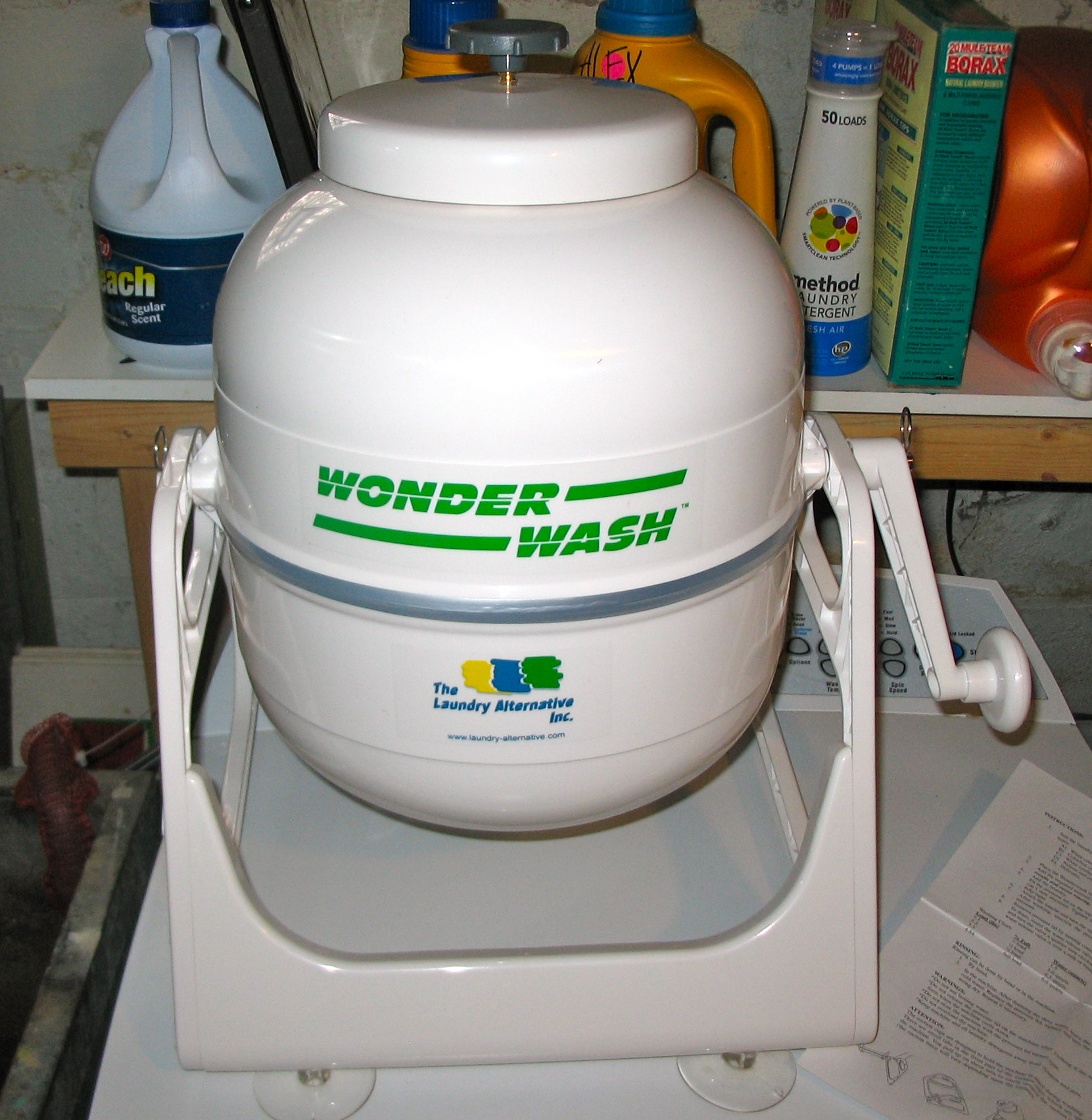
Here is a link to a Facebook photo album detailing my experience using the non-electric Wonder Wash for the first time. It was relatively quick and easy, and I was able to use only 5 gallons of water, all of which I recaptured to use as gray water for flushing toilets.

wonder wash machine

This is the new non-electric washer

As you’ll see, I did use the spin cycle of the regular washing machine for about 10 minutes, so I could hang my shirts without distorting them from the weight of the water. (I guess that would be the only water I couldn’t reclaim as gray water.) The only downside to the experience was that the directions that came with the Wonder Wash were unclear and incomplete. I had to go online to find instructions regarding amounts and temperatures of water to use for washing and rinsing, and then had to convert the liters to gallons.  Not really a big deal, and it’s easy to remember going forward.

A friend wondered about whether soap would be left in the clothes at the end of washing. My clothes are still damp as I write this, so I will post again to let you know how they turned out when dry.

February Mini-Challenge: Home Heating – How Low Can You Go

The sustainability group met this morning. 17 people attended, a number of them for the first time. Because February is often one of the coldest month’s of the year here in Minnesota, we decided to see what we could do about the home heating bill. That’s going to be a challenge for us. We already have a set-back thermostat and it seems to me we set it WAY back… but we’re up for a challenge. Let’s see how low we can go and not upset our tenant.

NEXT SUSTAINABILITY MEETING: March 5, 10:30 to noon, Peace Coffee on 34th and Minnehaha.

Laundry Room Conversations – Mindfulness

The last part of our conversation about laundry habits was recognizing how we use or misuse our time. We own a well functioning washing machine and gas dryer. We put a load of laundry in and walk away. Sometimes we walk away for 2 or 3 days only to come back to sour smelling clothes forgotten in the washer, or a wrinkled pile of fabric left in the dryer.

In other words, we are not mindful about what we are doing with our clothes. And that’s not the only thing we aren’t mindful about …

Continue reading