Author Archives: thinkofitasanadventure

Unknown's avatar

About thinkofitasanadventure

My husband Peter and I attended a sustainability conference with Richard Heinberg of the Post Carbon Institute in 2010. We learned some hard truths about climate change that shook us to our core. We knew we needed to transition away from fossil fuels as soon as possible, for the sake of our children. We initiated a neighborhood Transition group (Transition Longfellow). It became the center of our lives. In 2019, we downsized and moved to a tiny rural village. It's a whole new way of life and we've got a lot more learning to do. We're choosing to continue to "think of it as an adventure."

How Do We Get and Stay Motivated?

“Why bother. There’s nothing we can do.”

That’s what my highly educated coworker with two young children said when I told him about my neighborhood sustainability group and our activities. This position of resignation pains me deeply because it is a self-fulfilling prophecy.

The Transition Town movement is about choosing to act now in a planful, mindful (and even joyful and playful) manner, rather than waiting to react later when faced with the most painful circumstances. The Transition movement is the antithesis of resignation and helplessness. It presents a kind-of hope when facing a set of facts that can seem hopeless.

That doesn’t mean it’s easy to act, especially here in the U.S. where the weight of a culture of consumption and selfishness is enforced at every turn by businesses, politicians, media, and even families and some churches.

Because of this pressure to conform, the question of how to stay motivated for small and large personal change is always high in my mind. How do I stay the course on a daily, weekly, monthly and yearly basis? Especially when we “don’t have to change yet,” but are instead choosing to be proactive? I believe there are a few things that can and will help me.

Continue reading

Short-Term (?) Survival Without Home Heating

In December, people along our alley lost partial power for several days. In our house, we lost electricity to the 2nd floor and half of the first floor. One of our neighbors lost the use of his furnace (even gas furnaces use electricity, at least for the blower fan that takes the heat throughout your house). It was below freezing. It got me thinking about what we would need to do – temporarily or in the longer-term – to live in our house without a gas or electric furnace.

Continue reading

Get Together with Phillips Neighborhood This Saturday

Community Gathering of the Phillips Transition Town Group
When: Saturday, February 26, 11-1pm
Where: St. Pauls Lutheran Church, 2742 15th Avenue South Minneapolis

*Tasty food
*A local energy presentation
*Opportunities to connect with neighbors on projects
*An INDOOR PLANT SWAP

The Phillips Group has sent this invitation:

“We would love to connect with you, our neighbors, and invite you to this gathering! Our goal is to work with other neighborhoods that want to start up a Transition Town or those who are already doing it! This way we can share ideas, resources, and passion!

This month is Energy Month. We are looking forward to talking with you about really energetic (sorry, bad pun) happenings in the community moving towards locally produced and owned energy. There will be a presentation by a few people working in this realm in the neighborhood, followed by a short group discussion. Then, we plan on breaking out into our working groups. To start those groups, namely FOOD, COMMUNITY ARTS, ENERGY, COMMUNITY BUILDING.

Please look at our group page for more information about Transition Towns Phillips (http://TransitionPhillips.groupsite.com/main/summary)

Using Energy Audits to Make Progress

Incremental Changes Add Up

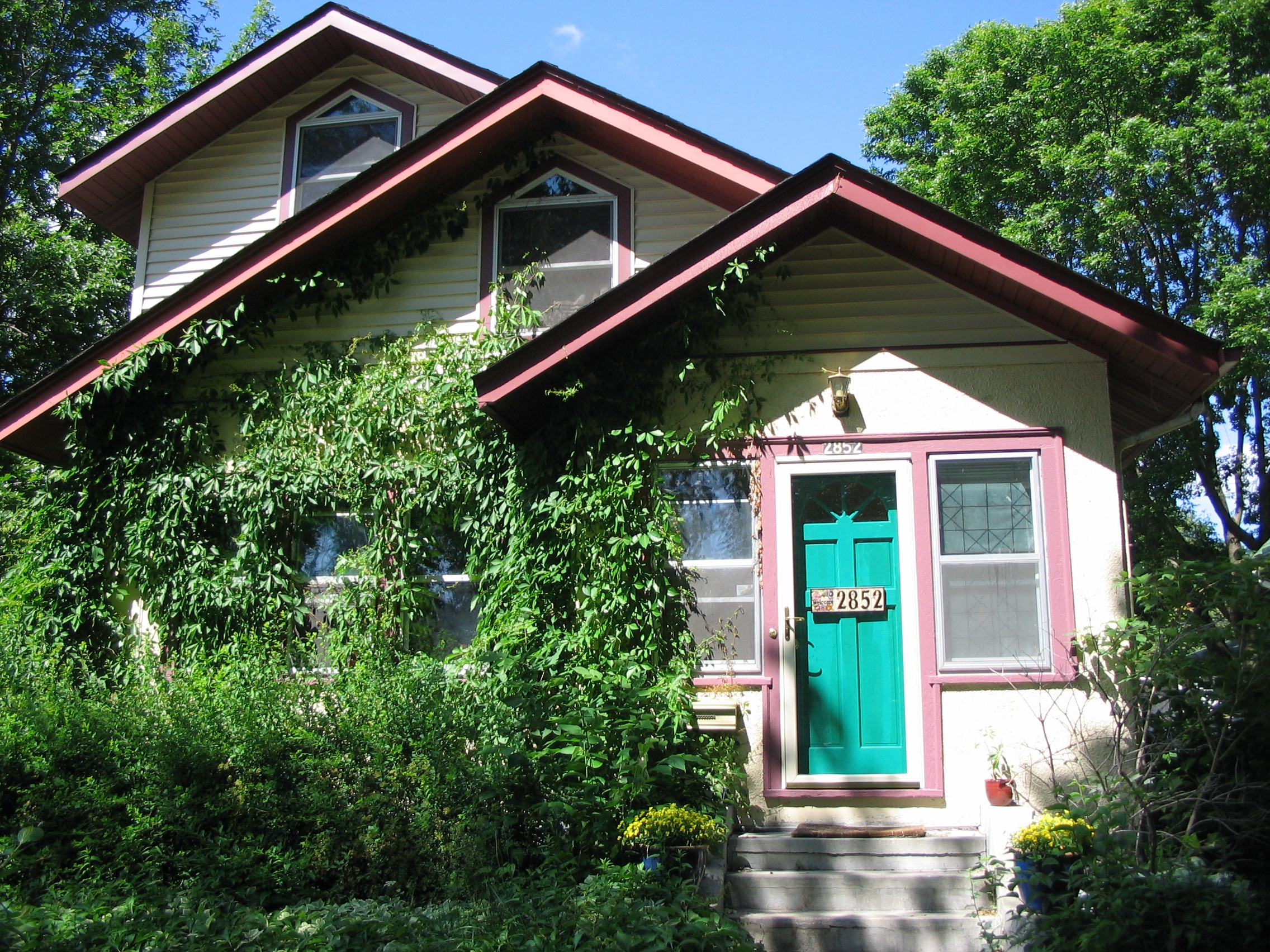
Shortly after I moved into my house, 15 years ago, I got an energy audit through our local utility company.The house The guys came out with their blower door to check for airflow and found that my house was a sieve. Built in 1915, it had its original windows and doors and enough drafts to blow out candles on a windy day. They gave me some rolls of weatherstripping, showed me where to caulk, and when they left I had a list of all the problem areas. I picked off the small, cheap projects first.

  • Install insulation pads behind outlet covers on outside walls.
  • Weatherstrip the doors
  • Caulk around the windows
  • Insulate the window jams of the old double-hung windows
  • Spray Great Stuff into the crumbling spots around the foundation – if mice are getting in, so is cold air
  • Use plastic over the windows in the winter

No change in the utility bills.

Continue reading

Sustainability Book Group

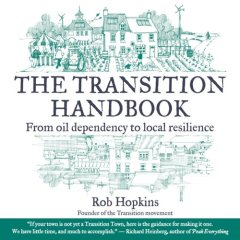
Our next meeting is March 19, 10:30 to noon at Peace Coffee in the community room on the right side, in the front. We will be reading the first section of the Transition Handbook – the section called The Head. It used to be online on a WIKI but appears to be removed. However, there is a PDF of the Transition Handbook online.

There were 4 people at this meeting. I quite enjoyed it. The conversation was wide-ranging, from what to do if you lose your electricity for two weeks in a Minnesota winter (most people will lose their furnace or the blower to their furnace if their electricity goes out), to the opportunity to teach/learn about food storage methods for people who want to do more intensive home gardening but don’t know how to can or prep for freezing. A lot of the conversation was about local food, backyard gardening, where to share excess food, why CSAs sometimes don’t work so well.

So here’s a question that came to mind from our food discussion: if we have a large increase in backyard farming, what will the effect be on coops and on organic farms that do CSAs? It seems to me the urban farmers are the same people who would have supported organic farmers and that by doing it ourselves, we may be undermining the type of healthy farming systems that we actually want to promote.

Anyone have any thoughts on this?

Why I bother, by Peter

Peter user pic

Peter Foster

When I talk about “sustainability” to people who aren’t already on board, it’s not unusual to hear: “Why bother? The problem’s so big, what you’re doing doesn’t make any difference.”

It’s hard to respond to that because a lot of people are unaware, or are in deep denial about how serious and immediate the problem is and I’m not comfortable trying to convince them. For one thing, I’m not very good at reciting sources and statistics. For another, I don’t want to sound like a doomsday prophet or backwoods survivalist. I also tend to feel like a hypocrite because I still have so far to go.

But my reply goes something like this:

We have already reached peak oil.  As oil becomes increasingly expensive and scarce, there is going to be a huge impact on virtually every aspect of our oil-dependent lives—in transportation, food, housing, employment. I believe we must do something now to change the way we live in order to avoid – or at least minimize – the crisis.

I am not willing to just wait and see what happens. I do not believe that government or science or market forces or divine intervention will figure it out and save us at the last second. I don’t believe that we will suddenly, painlessly switch to clean, renewable energy and use it sustainably.

It is up to us, as individuals (in our small ways) and as communities (in bigger ways), to “be the change we want to see in the world.” And I believe that change can actually be fun, rewarding and sustainable. I want a healthy, secure, vibrant future for my kids, and their kids. What we’ve been doing isn’t working. So I’m willing to try something new in the hope that we can make it better.

And for people who claim it’s too late anyway, I like this African proverb: “The best time to plant a tree is 20 years ago. The second best time is now.”

Check out this great song by Judy Small about the value of individual effort. Listen to the sample on iTunes to get a sense of how joyous it is!

One Voice In The Crowd by Judy Small

I’ve lived a life of privilege, I’ve never known what hunger is
I’ve never labored with my hands except to play guitar.
Middle class my middle name, life’s been more or less a game
But in the end it’s all the same, the buck stops where you are.

We are foolish people who do nothing
Because we know how little one person can do.
Yes, we are foolish people who do nothing
Because we know how little one can do.

It’s not my issue, not my scene, I’ve got to get my own house clean
I keep it neat and tidy just in case the Queen should call.
Come back to me another day and gladly I’ll join in, we say
And I’m just one voice anyway, just one brick in the wall.

One brick in the wall you may be, one voice in the crowd
But without you we are weaker and our song may not be heard.
One drop in the ocean, but each drop will swell the tide,
So be your one brick in the wall, be one voice in the crowd!

And we are foolish people who do nothing,
Because we know how little one person can do,
Yes, we are foolish people who do nothing
Because we know how little one can do.

http://itunes.apple.com/us/album/one-voice-in-the-crowd/id275674891

http://static.rateyourmusic.com/album_images/s215126.jpg

Explaining Global Warming: How Can It Be Warming When It’s So Cold?

I’ve heard it many times. I’m sure you have, too. Obviously there is no such thing as global warming because it’s cold in winter. Uh huh… so, here’s a video from Dr. Heidi Cullen, CEO of Climate Central, explaining the effects of global warming on the weather. Hope it helps you talk knowledgeably to those who want to understand.

Sustainability Film Series at the Film Society

Sustainability Film Series 2011 is a collaborative series of local premieres of documentary films that explore sustainability, followed by panel discussions with leading academics, community leaders, and citizens on local trends in sustainability. It is a collaborative, multi-venue project in partnership with the The Film Society of Minneapolis-Saint Paul, the Bell Museum, the Institute on the Environment (IonE).

Check it out. Anyone want to join us for a movie?