During the first discussion of the Personal Permaculture group, after hearing the principles and ethics, people shared their thoughts about the principle of observation and interaction. A couple of things struck me as particularly important areas to pay attention to this month: measurement, tracking and how we talk about sustainability (we personally, and the media in general).
Author Archives: thinkofitasanadventure
Personal Permaculture Discussion
We started the Personal Permaculture discussion group last Saturday morning at the Riverview Wine Bar. Some people are interested in learning about permaculture as it applies to their land; others are interested in understanding the principles in a broader context. That’s why we’ve called in “personal” permaculture. This week we reviewed the 3 ethics, the 12 principles and the concept of zones. I’ll go over those quickly here.
Emergency Preparedness and the Long Emergency
Preparedness Discussion Group
This group began in November 2012 after a few members watched the video Peak Prosperity and began talking about how to prepare for immediate emergencies and the “long emergency” of climate change. We aren’t showing the video to the group because it is too sales-oriented, but we do find information on the peak prosperity website to be useful, particularly the “What Should I Do?” list.
This is a complex, and emotionally challenging topic for many in the Transition movement. The majority of websites that discuss preparedness – and that sell preparedness products – have a distinctly militaristic and apocalyptic attitude. The peak prosperity site also has some of these discomfiting elements, but we encourage people to read the section on Community to understand that we are not advocating disregard for one’s neighbors. Chris Martensen uses an airline emergency as a metaphor: By taking steps to prepare ourselves, we are putting our own oxygen mask on first so that we can then assist the person next to us. We ARE in this together.
The group meets on the Third Tuesday of each month (various locations) from 6:30 to 8:30 pm. Topics include:
- December 18, 2012: Water — How do we meet our personal need for water, and our food garden’s need for water, in the event of a short-term emergency or longer-term drought? How would our community/city provide safe drinking water if our water system were to be damaged or compromised by storm or flood or loss of electricity?
- January 15, 2013: Heat – How do we heat ourselves in an emergency situation, such as being stuck in the car in a snowstorm or while camping? How do we heat our home in the event of a power outage (remember, gas furnaces use electric fans to move heat)? In the event we have no heat, how do we prevent cold-damage to our homes? What are the environmental consequences of different types of backup heat? How can we minimize that damage?
- February 19, 2013: Electricity – What are your household’s critical electrical needs? In the event of a short-term power outage, what backup system do you have in place? What are the environmental consequences of different types of backup electricity? What alternatives do we have to the electrical grid should electricity become unreliable or too costly over the long term? What can we do as a community to bring improvements to our grid and our energy future?
- March 19, 2013: Food 1 – How much food should one keep on hand in the home or in the car in case of short-term emergency such as a weather disaster? How does one’s food storage outlook change when considering the “long emergency,” when drought and weather instability may lead to crop losses and increased food prices? (What did our foremothers do to get through the winter?) What has been done on a governmental/ community level to store food in case of crop loss/food shortages?
- April 15, 2013: Food 2 – What kinds of food should be in the “deep pantry?” What is the best balance of growing your own versus buying from local farmers versus buying from the store? What would a good food storage area look like?
- May 21, 2013: Food 3 – What are the best methods for storing or preserving food? In what situations might one need a backup system for cooking food? For freezing food? What are the environmental consequences of different types of backup systems?
- June 18, 2013: First Aid and Health – How prepared are you to handle a sprain, a broken bone, an infection or burn? Do you have adequate emergency supplies in your home and your car? Do you have a small kit on your bike? What health maintenance resources are available within the community? Who in your area understands no-cost or low-cost natural health treatments?
- July 16, 2013: Finances – If your home is destroyed by a tornado, will you be able to access your money and credit? Are important documents stored safely offsite? In the face of the long emergency, how might our financial system change? What constitutes real wealth?
- August 20, 2013: Community – What does a resilient community look like and what steps can we take to help build resilience? How can we take what we’ve learned and share it? What institutions in our community can be a resource for preparedness? For example, if a tornado destroyed homes in this area, are there churches that would open their doors to those made homeless?
Personal Permaculture Discussion Group
Transition Longfellow will be hosting a year-long conversation on Personal Permaculture. January’s kickoff meeting will feature Longfellow master gardener Theresa Rooney. She will provide an overview of permaculture, introducing and explaining the principles and ethics. To learn more, see the Personal Permaculture page under Discussions.
- Location: Riverview Wine Bar on 42nd Avenue and 38th Street, Mpls
- Time: 10:30 to noon
- Dates: First Saturday of each month
How Will Climate Change Affect Minnesota?
It’s easy to find predictions of the global impact of climate change coming from the scientific community — temperature extremes, drought and flooding, giant storm systems. In fact, we’re already seeing the effects because the climate has ALREADY CHANGED. What has been a bit harder to find is information about how climate change has affected Minnesota and how it is expected to impact us in the future.
Last night I attended Policy & A Pint at the Varsity Theater. The main speaker was MPR News’ chief meteorologist Paul Huttner. Special guests were The Theater of Public Policy, an improv group that uses comedy to bring serious issues to life. I learned a few things about climate change — and the reporting of climate change — that I didn’t know.
The U.S. states experiencing the greatest change in climate are Arizona (1) followed by the upper midwest states — Minnesota (3), Wisconsin, Iowa, Michigan (4). The Minnesota Climatology Working Group reports that Minnesota has seen a significant increase in the rate of warming since 1980. We are warming faster – in some areas of the state (central and southeast) much faster — than the previous 100 years.
We’ve seen some pretty warm summers recently, including 2011 when Moorhead and Madison, MN, hit a record dewpoint of 88 degrees and Minneapolis/St. Paul also had its highest dewpoint of 82 to 84 degrees. Combine dewpoint – which is a measure of humidity – and temperature and you get a heat index rating (Who holds the record? Appleton,Wisconsin. In 1995, it had a dewpoint of 90 degrees and an air temp of 101, giving it an extraordinarily dangerous heat index reading of 148.)
But the real change has been in overnight lows not being as low, and in warmer winter temperatures.
The temperature of the water in Lake Superior hasn’t been measured for all that long – only since the early 80s. Climatologists, who study trends over long periods of time, appear uncomfortable making definitive statements about lake warming over that short a time period, but the measured temperature rise in the past 25 years has exceeded 4 degrees.
Huttner told the audience of primarily University students that no one born after February 1985 has experienced a colder than average winter.
If You Can’t Predict the Weather, How Can You Predict the Climate?
The surprise statement of the evening was on the role that meteorologists have played in informing the public about climate change — or rather, the role they have NOT played.
Huttner said, in his experience, most meteorologists are climate change deniers. When asked how much of that denial is due to pressure from news directors — news stations routinely refuse to cover climate change because it is “too political” — he said he believes that perhaps as many as half are pressured into denial.
Unfortunately, meteorologists are the people most accessible to the general public, which is why it is critically important that they not contribute to the distortion of information in the news. Forecast the Facts is a grassroots organization that seeks to hold broadcast meteorologists and the news media accountable for misinformation and false balance.

Baby It’s Cold Out There – but warm in here!
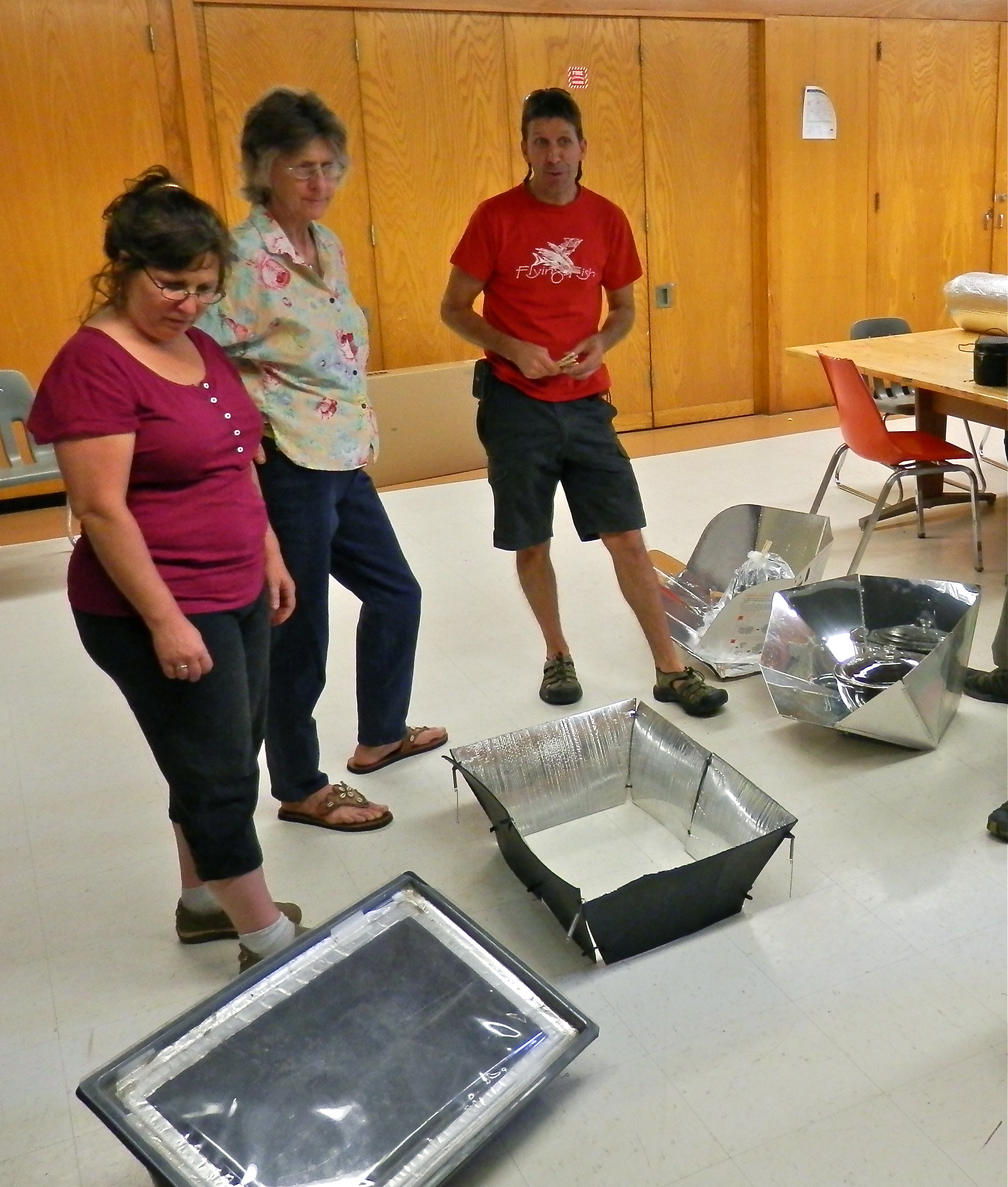
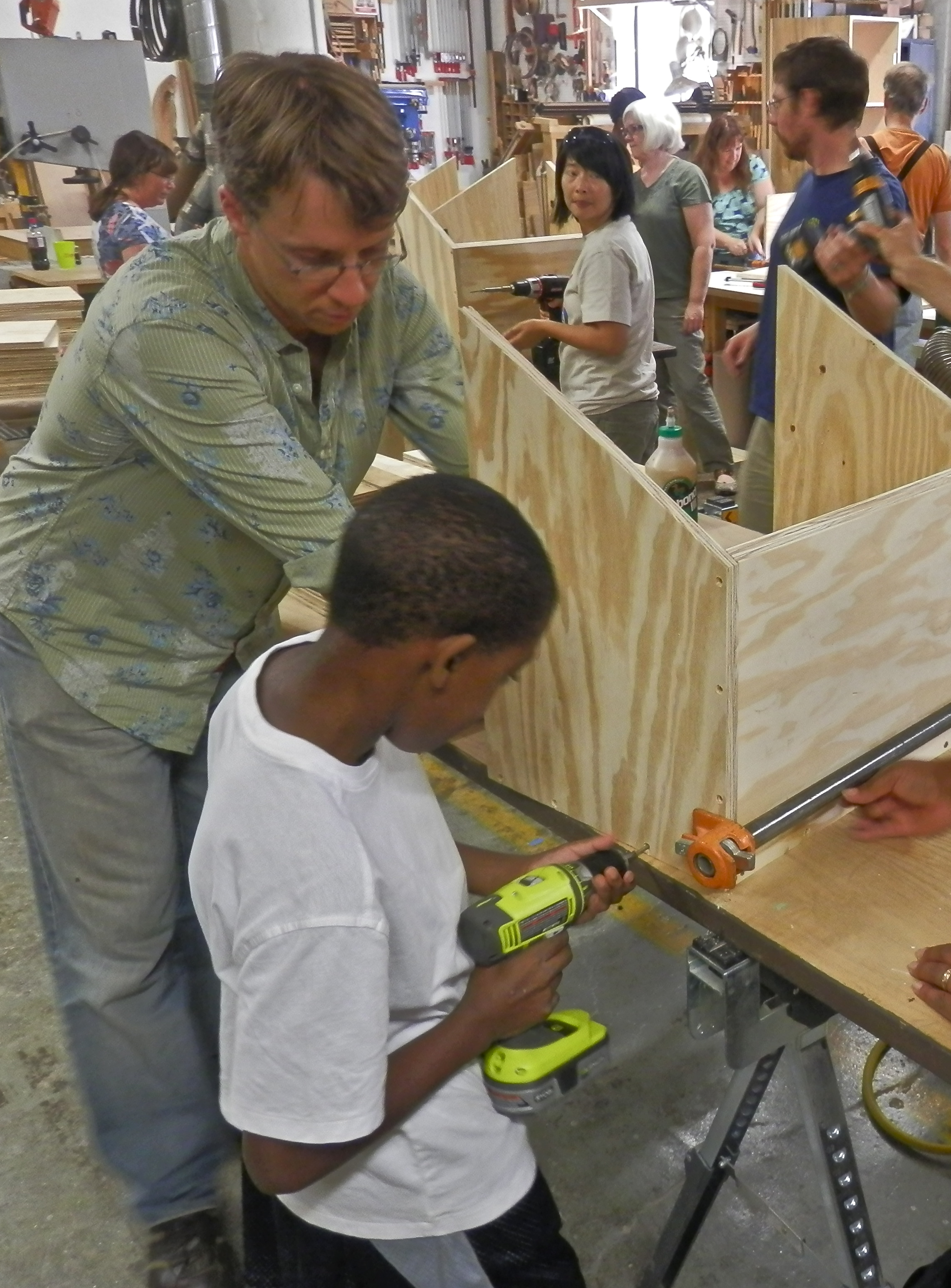
Solar Hot Air Panels Doing Their Job
I was initially uncertain about the value of buying solar hot air panels. The therms we were told the two panels would produce seemed like they would be too little to make a difference. But now that it’s down around 30 degrees, I’ve got to say, I’m loving it!
I work in a second floor home office. The stairwell door is kept closed from the cat and hot air vents are closed to keep heat in the main areas of the house for our roommates. The general house thermostat is set at 57 to 62 degrees F and the second floor would get very cool. I used to wear gloves and kept a blanket to cover my legs.
Then we installed 2 solar hot air collectors. There is a box on the wall in my office that shows me the heat that is available in the solar panels and the air temp indoors on the second floor. On a sunny winter day when it’s below zero, I’ve seen as much as 120 degrees of heat in the panels! Today has been partly cloudy and the fan has kicked in a few times, bringing the office to 65 degrees.
I work on the phone a lot and the fan noise is noticeable but not usually a problem (even though the fan is located directly behind my chair.)
People have asked how much it has reduced our heating bills. I can’t answer that question. We didn’t have any vents on the outside walls on the second floor so the solar installers couldn’t hook into the regular heating system. The space is 480 sf and has only one cold air return (and a stairwell). I’m not sure how well the heat upstairs gets circulated around the house. My hope is that less gas heating on this floor means more heat stays in the basement and first floor, reducing our gas use.
What I can say is how much of a difference it has made in my comfort while working — no more cold hands or blankets. The 2nd floor is reasonably well insulated so the warmth stays on into the evening. Often the fan kicks on in the morning by 8:00 am so it’s warming as I rise.
Alternative energy sources for heating is a real problem for Minnesota homes. To provide us with natural gas for heat, people living in other states have to live with the risks of fracking. It’s not a fair trade-off but there haven’t been a lot of options. Solar hot air collectors are one part of the solution.
Tuesday, Nov 27, Take Action for the Climate
The Environmental Quality Board is holding public meetings across the state of Minnesota to gather input for the statewide Environmental Congress in March. Tuesday, November 27, is the only date of a meeting in the Twin Cities. It will be held at Normandale Community College from 6:30 – 9:00 p.m.
This is a critical opportunity to deliver a clear message to state leaders about the need for immediate action on the climate. Luckily for Minnesotans, we can make one simple request: “Implement the Next Generation Energy Act.” Signed into law in 2007 by Governor Pawlenty (R), this Act is quite possibly the most progressive climate change legislation in the nation but it has been languishing, unimplemented. We need the current Administration and legislature to move this forward.
Key Points of the Next Generation Energy Act of 2007
1. Reduce Greenhouse Gas Emissions:
- Relative to 2005 base levels, the state must cut greenhouse gas emissions 15 percent by 2015, 30 percent by 2025 and 80 percent by 2050.
- The state must derive 25% of its total energy from renewable power sources by 2025 (“25 by 25″).
- No large fossil fuel-fired power plant can be built in Minnesota.
- No utility can import electricity from a large fossil fuel-fired power plant built in another state that was not operating on Jan. 1, 2007.
2. Energy conservation: The law contains a five-part conservation and efficiency strategy, including establishing a statewide energy conservation goal of 1.5 percent of annual retail electric and gas sales.
3. Community-based energy development: The law overhauls the state’s existing energy development statutes.
An added benefit to implementing this existing law is that such significant changes in our energy infrastructure will create a large number of new jobs. Job creation is Governor Dayton’s primary focus so this message should be well received.
“Implement the Next Generation Energy Act!”
Spread the message. This soundbite must be repeated consistently to our elected officials at this and other Citizen Forums scheduled around the state:
- Rochester: Wood Lake Meeting Center, Nov. 27, 9:30 a.m. – 12 noon
- Duluth: Lake Superior College, Nov. 28, 5:30 – 8:00 p.m.
- Worthington: Worthington High School, Dec 10 – 3:30 – 6:00 p.m.
- St. Cloud: Stearns County Service Center, Dec 12 – 5:30 – 8:00 p.m.
- Moorhead: Minnesota State University, Dec 14 – 3:00 – 5:30 p.m.
Bill McKibben’s New Math Should Mean Action
Bill McKibben’s article on climate change, appearing in the July 19, 2012 issue of Rolling Stone magazine — “Global Warming’s Terrifying New Math” — is one of the most important articles you will read this year.
In it he explains that the planet has experienced a 0.8 degree (Celsius) increase in average global temperature (hotter in some places, colder in others). And now that we’ve gotten the ball rolling, it won’t stop there. We’ve triggered a feedback loop of thawing permafrost and polar ice melt that will release even more greenhouse gases. Scientists say the feedback loop will result in (at least) another 0.8 degree temperature increase, regardless of the actions we take.
Knowing the impacts that climate change is already making (see the Climate Vulnerability Monitor), world “leaders” agreed in Copenhagen to limit climate change to 2 degrees of hell. However, they did so without any actual plan to achieve that limit.
McKibben likens that agreement to playing Russian roulette with 5 bullets in the gun.
- The first bullet hurtles toward island nations like Kiribati, which cannot survive rising sea levels. But it’s not just island nations that will disappear, so too will inhabited low-lands, areas along the ocean coasts, the city of Venice, the lowlands of Holland.
- The second bullet will hit nations whose water supply is dependent upon seasonal snow and ice (notably parts of China, India and the American West), which will suffer increasing desertification.
- The third bullet — heat — stresses food crops, drives massive wildfires and kills plant and animal life. We’ve already seen catastrophic corn crop failure throughout the U.S.
- The fourth bullet — torrential rains and cyclones — will hit in old, familiar places, like Bangladesh, with increasing frequency and intensity. But we’re seeing the consequences of torrential rainfall even in Minnesota, where “once in a lifetime” floods now come every few years.
- The fifth bullet hits when plant and animal life that cannot adapt as quickly as humans begins to disappear. We may think we can live without polar bears, but just how many animals and plants can we really live without?
World “leaders” found this price acceptable, in exchange for the ability to continue burning fossil fuels and conducting business as usual. Unfortunately, the Obama administration seems to have backed off even this very minimal agreement. The U.S. Special Envoy for Climate Change, Todd Stern, has said that countries should pick their own goals without any internationally agreed upon requirements. In essence, allowing some to do nothing.
Those in the Transition community might once have hoped that decreasing oil supplies would keep climate change in line. McKibben makes it clear that there is enough oil, gas and coal in the ground to load that last bullet in the gun, with ammunition to spare. We cannot count on luck – or on the promise of technology – to save us. We must actively choose life.
Read Bill McKibben’s article.
Understand what this means.
If you find it too distressing, find a supportive community in which you can begin to engage the problem of greenhouse gas emissions in positive and meaningful ways.
Whatever you do, please don’t read it and then think you’ve done enough.
Acknowledging Trade Offs when it Comes to Saving Water
Oil and Gas versus Water
The greater the distance your food travels to get to your table, the more oil-dependent your lifestyle. Saving energy is one reason why we’ve expanded our fruit and vegetable production. Freshness and knowing that it was safely grown are other reasons. But gardens themselves take resources, particularly water.
Although we’ve had somewhat decent rainfall this year in Minnesota, fresh water is a valuable resource that really needs to be conserved. We have only one rain barrel and we haven’t always used it well. We want a multi-barrel system with a pump but we’re not there yet. Even the multi-headed sprinkler system I set up hasn’t been working properly. Next year I’m going try the newest low-tech watering trick every garden website is showing – plastic pop bottles planted upside down near voracious plants like tomatoes.
We eat something from the garden almost every day, but I’m also learning to process vegetables for winter. I’m most familiar with water-bath canning. I can tomatoes, sauce and pickles – things with high amounts of acid. It takes quite a lot of water to wash the vegetables and to fill the canning pot. And it takes a fair amount of natural gas to heat all that water. If I’m going to be canning two days in a row, I save the water in the canning pot, but I have a very small and inefficient kitchen. I can’t keep a huge pot of water sitting around. If it’s not going to be used soon, we “water” the compost bin (compost breaks down faster when it’s got the right amount of moisture) or the veggies with it.
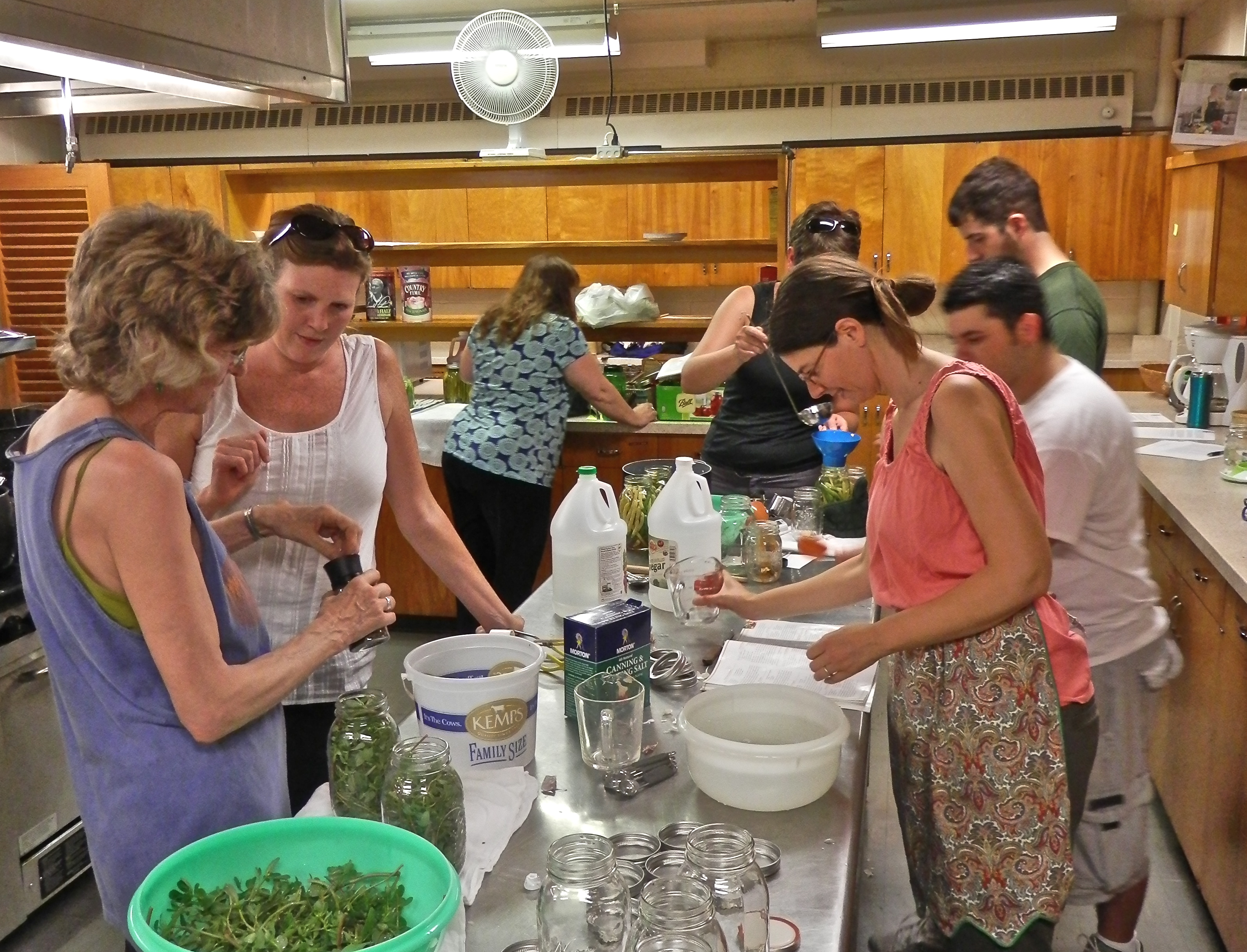
In the past month, I’ve been canning with my neighborhood Transition group (Transition Longfellow). As part of our reskilling efforts, we’ve been teaching folks how to pickle veggies and can tomatoes. By doing these projects together in small groups — many people using the same water bath — we save water and natural gas.I recently bought a pressure canner so I can process low-acid foods like beets and green beans and meat. At first I couldn’t understand why people said it was more efficient because a pressure canner takes far more time to process foods. Now that I’ve done my first batches of soup and broth, I understand. The pressure canner uses only a couple of quarts of water – as opposed to many gallons used in the water canner – and once it reaches boiling, I can turn the gas to the very lowest setting. Pressure keeps the heat high.
I’ve got two more food preservation methods to learn: dehydrating and fermenting. I’ve just bought a pickling jar to ferment cucumber pickles and a glazed crock to ferment cabbage for sauerkraut, both from EggPlant Urban Farm Supply. They also have a glazed water-seal pot for pickling, which is locally made. I’m in love with it but it’s too expensive for me.
Ultimately, I need to learn more about methods of food preservation that use fewer, or more easily available resources. I’ve ordered two books on this:
- Preserving Food without Freezing or Canning: Traditional Techniques Using Salt, Oil, Sugar, Alcohol, Vinegar, Drying, Cold Storage, and Lactic Ferment,” by The Gardeners and Farmers of Centre Terre Vivante.
- Independence Days: A Guide to Sustainable Food Storage & Preservation,” by Sharon Astyk.